Reflections – April 16, 2014 (Happy Passover)

Friends,

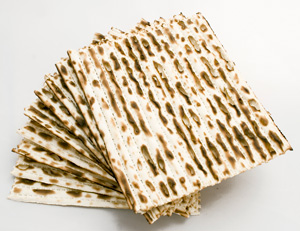
Stack of MatzothOn Monday night we celebrated the Festival of Passover with Jews around the world.  Throughout history, the Seder meal has provided a sense of family, Jewish identity and hopes for the future.  Through ritual foods and readings, we are challenged to recognize our roles in the redemption of the world.  Feeding the hungry, fighting injustice and reaching out to those in need are among the many themes we consider as we retell the story of our Exodus from Egypt.

As we refrain from eating matzah over the course of this week, may each of us find a renewed sense of connection with the Jewish community and an increased sense of awareness of the injustices that continue to plague our world.

Beckye joins me in wishing all of you a Happy Passover.

L’shalom –

Steve

Reflections – April 2, 2014 (Passover Preparation)

Friends,

Passover begins on Monday evening April 14, but Jews around the world begin preparing for Passover many weeks ahead of time. Most observant Jews begin cleaning their homes of all leavened products, and while most Reform Jewish households do not clear their homes, there is no reason why all of us cannot prepare our spirits in advance of our Passover celebrations.

Passover begins on the 15th day of the Hebrew month of Nissan, and is the most observed Jewish holiday in the world. According to the 2000-01 National Jewish Population Survey 67% of Jews routinely hold or attend a Seder.

In addition to the Seder meal, which involves an array of festival foods, the other primary, food-related observance of Passover involves refraining from eating chametz (leavened bread). This prohibition is commanded in the Torah:

For seven days you shall eat unleavened bread, but on the first day you shall remove the leaven from your homes … you shall guard the unleavened bread, because on this very day I will take you out of the land of Egypt; you shall observe this day for your generations as an eternal decree. – Exodus 12:15-17

This commandment regarding leavened products applies not only to the consumption of bread, but to owning or deriving any benefit from any kind of leavened product in any way shape or form. Therefore, before the arrival of Passover, observant Jews remove and disown all leavening.

In ancient times (when food products were made from very simple ingredients at home), removal of all leavening was a much easier task. With the evolution of a complex food economy, Jewish law had to evolve as well. The rabbinic legal response to these new realities creatively enabled the Jewish people to fully observe this commandment without completely uprooting their lives every year.

The rabbinic solution was brilliant, and it should serve to inspire all of us to strive to think out of the box when it comes to considering ways to apply Jewish law in our everyday lives. Here is how the rabbis re-constituted the law:

The sages determined that as long as the leavened products were not owned by the Jewish household, all family members were legally clear from “being in the possession of” the prohibited products. Thus, for generations observant Jews sold their leavened products to their non-Jew neighbors through a “bill of sales”. This sale serves as a binding transfer ownership of all leavening for the defined period of Passover. After Passover has concluded, these Jewish family simply purchase the products back at a pre-set price.

For those of us who do not observe the festival with such strictness, this process may seem like folly. However, from a Reform Jewish perspective, it represents an extremely creative way of allowing the laws and values of heritage continue in a world that is constantly changing.

As we begin our preparations for Passover (in whatever form it may take in our lives), it is important for us to try to employ the values and lessons at the heart of this festival in ways that are meaningful for us today. Here are two ways to apply the prohibition against leavening which may be meaningful to your household:

Donate to the HCRJ Passover Food Drive: Rid your pantry of chametz or any other foods that you feel may help to feed the hungry.

Contribute to the Jewish Family Service Passover Assistance Program:
This fund helps those in need purchase Passover products. If you are interested in supporting this annual food assistance program visit the JFS website at: www.jfshouston.org

L’shalom –

Steve

Sources:
• Judaism 101.com
• MyJewishLearning.Com

The Meaning and History of Hallel

Most of us are familiar with the Hebrew word, Halleluiah.  It is a word associated with devotion, thanksgiving and praise.  Halleluiah means “Praise be God,” and it is a central theme throughout the Passover season.

During the second half of our Seder (the part that immediately follows our festive meal) songs of praise to God dominate our festivities.  Theologically, these expressions of thanks and praise logically follow a fabulous feast celebrating our freedom and our hopes for a future redemption.  These songs of praise, which come directly from the Book of Psalms, are referred to as Hallel.

Hallel is traditionally recited on all of the festival holidays, and it is used to mark and celebrate the coming of the new moon each month.  According to the Talmud, Hallel serves to remind us of five major themes in the unfolding story of our heritage.  These themes include the Exodus from Egypt; the splitting of the Red Sea; the giving of the Torah; the revival of the dead; and the challenges preceding the Messianic Age (Pesachim 118a).   In other words, as we recite Hallel as a community of faith, we express our joy and gratitude for the miracles of the past with the hope that God will bless us with such miracles again in the future.

The Hallel liturgy is brief, and because it is constructed from selections from the Psalms, it lends itself to a wide variety of musical settings.  Some of the compositions are complex, involving large choirs and elaborate instrumentation.  Other settings are more participatory, enabling the congregation to express their joy and gratitude through song and verse.  Regardless of the setting, Hallel can be a powerful way to express praise to God as a community.

Join us for a magnificent HCRJ Hallel on Friday night, April 18.  This special service, which is part of our year-long got shabbat? series, will also be our second service from the rich musical heritage of Classical Reform Judaism.

The Jews of India

The history of the Jews of India is believed to date back thousands of years. Many believe that the first Jewish community arrived in India shortly after the destruction of the First Temple by the Babylonian Empire in 586 BCE, making Judaism one of the earliest foreign religions to arrive in India in recorded history.

In contrast to other parts of the world, India’s relationship with Judaism remained consistently open and tolerant. Throughout history, Jews have been welcome and accepted. There has been no known anti-Semitism in India nor have Jews ever been viewed in a ways that differ from any of the myriad of cultural or religious minorities that reside in the country. This high level of tolerance and acceptance is, in part, due to the fact that neither Jews nor Hindus proselytize. As a result, the greater Hindu community has never felt threatened by a Jewish presence.

Furthermore, the general nature of India’s pluralistic culture is porous enough to absorb hundreds of different religions and belief systems. In such an environment, Judaism was simply understood as yet another spiritual path in a sea of intertwining faiths and traditions. Thus, India’s Jews have long found a spiritual and cultural sanctuary – the likes of which were rare found in any of the countries that Jews sought refuge.

Over the course of centuries five Jewish groups became established communities in India. The oldest Jewish community is that of the Jews of Cochin. They arrived in India 2,500 years ago, and continue to have a presence on the western coast. The Bene Israel represent the largest community and they claim that their ancestors arrived 2,100 years ago after a shipwreck stranded seven Jewish families just south of Mumbai. They were nicknamed the shanivār telī (“Saturday oil-pressers”) by the local population because they abstained from working their oil-presses on the Sabbath. The Baghdadi Jews arrived in the city of Mumbai from Iraq, Iran, Afghanistan, and the Arab countries about 250 years ago and have found great opportunity in the world of business and trade. Finally, there are the Bnei Menashe and the Bene Ephraim. Each of these groups have newer connections to the Jewish faith.

Before the establishment of the State of Israel, the Jewish community of India numbers approximately 30,000. In 1948, most of India’s Jews migrated to Israel. Today only seven to eight thou-sand Jews remain, most of which are Bene Israel origin.

On Friday night, February 21, join us for a special Sabbath in the tradition of India’s Jewish community. Traditional Indian musical and food will shape an exotic evening as we learn about this unique and richly spiritual aspect of our cultural heritage.

– Steve

Previous